This is the photo am choosing to recreate for my 3d digital photography. However, I am going to use photos I took, one of the sea and replace the boat with a picture of the moon I took. I chose this image as it challenged my knowledge of photoshop and allowed me to learn new skills. I also enjoyed it's abnormal aesthetic.
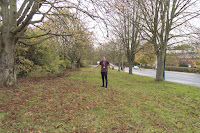
Multiplicity The aim of this exercise was to have one picture with the same person occurring in the same picture. Before we started we were told to be careful as if the lighting dramatically it would show up along with making sure the background didn't change so I had to be careful with cars in the background. I started out by taking four digital pictures of my classmate posing in different positions each time. Once I did that I used photoshop to edit them making them all the same for example the exposure as some were darker than others. On photoshop i also stacked the pictures and created a mask layer for each one, this allowed me to use the erase tool and remove one of the Alex's and by pressing 'command I' it removed everything on that layer besides what i rubbed out, that left two Alex's i then continued doing this for each one until all the photos of him were on one picture.
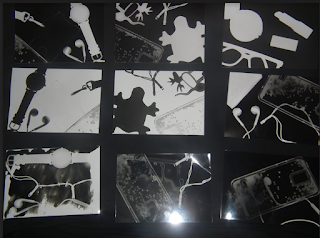
Today we went into the darkroom to make photograms and produce pinhole photographs. We started by using photographic paper with everyday objects placed on top. The paper was then place on an enlarger which exposed the paper to light causing the objects on top to imprint as light cannot travel through them, and once developed leaving the different shapes white whilst turning the surroundings black. The pinhole photographs were created by placing photographic paper into a shoe box tightly sealed to prevent any light getting in. The box had a pin sized hole on the lid of the box covered with a removable flap that when opened would expose the paper to light imprinting whatever is surrounding the box at the time. Depending on how long the light is exposed will affect how the picture will come out, if the paper is over exposed the photo will be too dark, however if the picture is under exposed it will develop to faint. Materials - Photographic paper, enlarger, dif...


Comments
Post a Comment